What Does the Name OKANEN Actually Mean?
You see our products online and wonder about the name. It sounds unique, maybe Japanese? Let me tell you the real story behind our brand and what it represents.
OKANEN is the brand name of our factory-incubated beauty and personal care line. The name is a transliteration from Chinese, representing our roots as a manufacturer in Shantou, China. It stands for the quality and innovation we pour into every product we create.
The story of a name is just the beginning. The real value is in the product that carries the name. For us, that story started with a single, game-changing product that took markets by storm. Would you like to know which one it was?
What Product Made OKANEN Famous?
You are searching for a hero product for your market. But it's hard to find one that truly captures customers' attention and drives consistent sales. Our Japanese Sakura Amino Acid Shampoo is that product.
The product that put OKANEN on the map is our Japanese Sakura Amino Acid Shampoo. It became a bestseller in Southeast Asia and the Middle East1 due to its gentle, effective, and beautifully scented formula. This single product's success is the foundation of our brand's recognition.
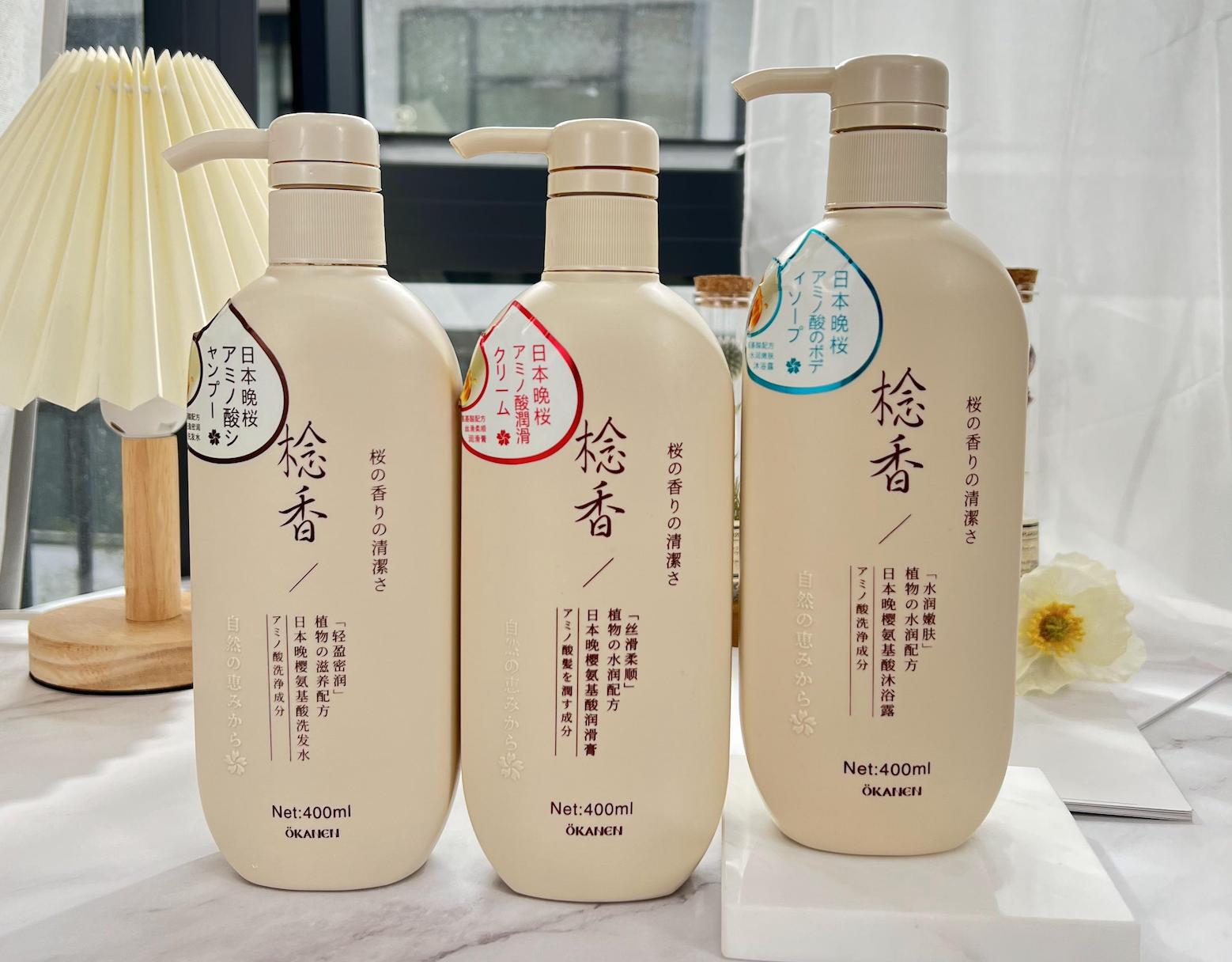
When we first developed this shampoo, our goal was clear. We saw a market full of harsh, sulfate-based shampoos that stripped hair of its natural oils2. I remember our R&D team working for months to perfect a formula that was different. We chose amino acids as the primary cleansing agent. They are incredibly gentle and cleanse effectively without causing dryness or irritation3. This makes the shampoo perfect for people with sensitive scalps or those who wash their hair daily. We combined this with the delicate, natural fragrance of Japanese Sakura, or cherry blossom. This was an instant hit, especially in Southeast Asian and Middle Eastern markets where consumers appreciate sophisticated, non-overpowering scents and gentle formulas4. The success wasn't just about the formula; it was about giving people a better daily experience.
OKANEN Shampoo vs. Traditional Shampoos
| Feature | OKANEN Sakura Shampoo | Traditional Shampoos |
|---|---|---|
| Cleansing Agent | Amino Acids (Gentle) | Sulfates (SLS/SLES) (Harsh) |
| Scalp Feel | Moisturizing, non-stripping | Can be drying and irritating |
| Key Ingredient | Natural Sakura Extract | Often synthetic fragrances |
| Target User | Quality-conscious, sensitive scalp | Mass market, budget-focused |
How Can You Be Sure You're Buying an Authentic OKANEN Product?
The risk of counterfeit products can damage your brand's reputation5. You worry that the items you source might not be genuine, which could disappoint or even harm your customers. We've introduced new security features to protect you.
Due to the shampoo's popularity, fakes have appeared6. To protect our partners and customers, we now add an anti-counterfeiting label7 to our packaging and engrave our logo directly onto the pump head. These features guarantee you are receiving a genuine OKANEN product.
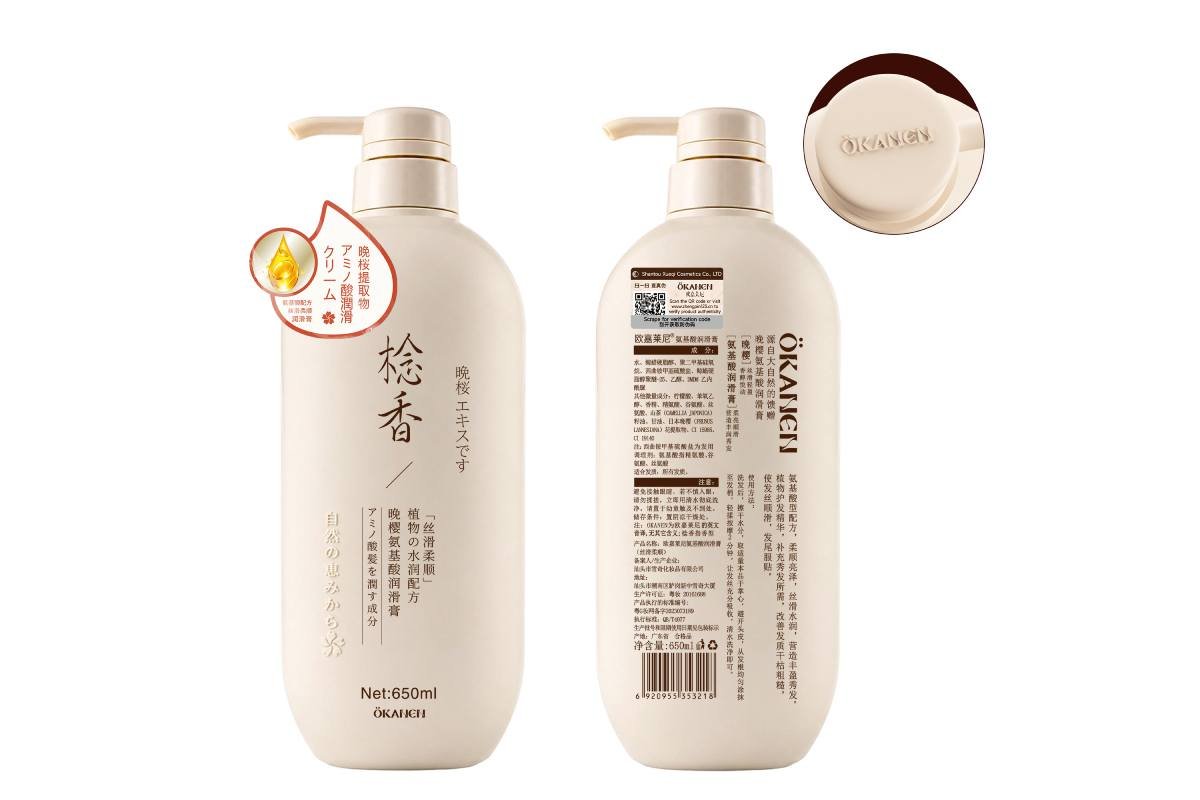
Success, unfortunately, attracts imitators. We were proud of how much people loved our Sakura Shampoo, but we soon discovered dishonest sellers making cheap copies. This was a serious problem. These fakes not only hurt our brand but also posed a risk to customers who thought they were buying our quality formula. For our partners, the procurement and brand managers who trust us, this was unacceptable. Your reputation is built on selling authentic, high-quality products. So, we took immediate action. We invested in a two-part security system for our new batches. First, we added a special anti-counterfeiting label. This label has unique features that are very difficult to copy. Second, and more permanently, we engraved our "OKANEN" logo onto the top of the pump head. This small detail is a permanent mark of authenticity. It's our promise to you and your customers that you are getting the real thing, made with the quality and care you expect from us.
Where Does the OKANEN Quality Truly Come From?
A single hit product is great, but you need a reliable partner for long-term growth. Many factories can't offer consistent quality, innovation, or scale. OKANEN is backed by our powerful and experienced factory.
The OKANEN brand is an extension of our factory, Shantou Xueqi Cosmetics Co., Ltd. With over 30 years of manufacturing experience, our quality comes from a deep history of R&D, strict quality control, and advanced production for global brands. You can find us on our official site okanen.com or our Alibaba page.

The OKANEN brand is our showcase to the world, but our core business is helping you build your brand. Our factory, Shantou Xueqi Cosmetics, was founded in 19958. For over 30 years, we have been the silent partner behind many successful brands in Southeast Asia, Europe, and America. We provide one-stop OEM/ODM services9, which means we handle everything from formula development to packaging design and mass production. The same team, technology, and quality standards that made the OKANEN Sakura Shampoo a success are available to you. We hold major international certifications like ISO 22716 and GMPC10, ensuring our processes meet the highest global standards. Our expertise is not just in making products, but in understanding markets. We help our partners create products that are perfectly tailored to their customers' needs. So, while you may know us through OKANEN, think of us as your future manufacturing partner.
Our Factory's Core Strengths
- Decades of Experience: We have been in the cosmetics manufacturing business since 1995.
- Full Certifications: We hold ISO 22716, GMPC, and can assist with market-specific needs like HALAL11.
- Complete Customization: Full OEM/ODM services, from a unique formula to your branded packaging.
- Global Export Know-How: We have a rich history of shipping products to over 50 countries12.
Conclusion
OKANEN is our factory's showcase, made famous by our Sakura shampoo. We protect its authenticity and offer our deep manufacturing expertise to help you build your own successful brand.
"20 Best Shampoos For Asian Hair To Solve All Hair And Scalp Issues", https://www.harpersbazaar.com.sg/beauty/hair/best-shampoos-asian-hair. Provides market data or media reports indicating the high sales volume or popularity of the OKANEN Sakura Amino Acid Shampoo in Southeast Asian and/or Middle Eastern markets. Evidence role: statistic; source type: other. Supports: The claim that this specific shampoo is a bestseller in Southeast Asian and Middle Eastern markets.. Scope note: Sales data may be from a specific timeframe or a limited set of countries within the specified regions and may not represent the entire market. ↩
"What Are Sulfates? The Truth About SLS in Shampoo & Soap", https://www.webmd.com/beauty/what-to-know-sulfate. Explains the chemical properties of sulfates (e.g., Sodium Lauryl Sulfate) as strong surfactants and their potential to remove sebum from the hair and scalp, which can lead to dryness or irritation for some individuals. Evidence role: mechanism; source type: paper. Supports: The mechanism by which sulfates (like SLS/SLES) can strip natural oils from hair and potentially cause irritation.. ↩
"Why Amino Acid-Based Surfactants Belong in Your Cleanser", https://www.emogeneandco.com/blogs/news/smart-suds-why-amino-acid-based-surfactants-belong-in-your-cleanser?srsltid=AfmBOor-yqg1hSDz_1KltmYdHNZK0maeWEZ9TX3HF9SVuIX1ERISnyr_. Details the properties of amino acid-based surfactants, noting their mildness, good foaming ability, and compatibility with the skin's natural pH, making them suitable for gentle cleansing formulations. Evidence role: mechanism; source type: research. Supports: The properties of amino acid-based surfactants that make them a gentler alternative to traditional sulfates for cleansing hair.. Scope note: The source may discuss the general properties of these ingredients, not their specific performance within the OKANEN product formula. ↩
"Beauty & Personal Care - Southeast Asia | Market Forecast - Statista", https://www.statista.com/outlook/cmo/beauty-personal-care/southeast-asia?srsltid=AfmBOorgBAiwiSjN7CwP41TLHP7v_UCIYNSIkDMMudEwK1foyBBs_I7U. Presents market research or consumer survey data indicating a growing preference for personal care products with gentle ingredients and subtle, sophisticated fragrances in Southeast Asian and/or Middle Eastern markets. Evidence role: statistic; source type: other. Supports: The consumer trend in Southeast Asian and Middle Eastern markets towards gentle product formulations and specific types of fragrances.. Scope note: Consumer preferences can be diverse and may vary significantly by country, demographic, and time period within these broad regions. ↩
"The real cost of counterfeits is higher than you think - OECD", https://www.oecd.org/en/blogs/2025/10/the-real-cost-of-counterfeits-is-higher-than-you-think.html. Provides analysis from an international organization, such as the OECD or WIPO, on the economic and reputational damage caused by counterfeit goods, including erosion of brand value and consumer confidence. Evidence role: general_support; source type: institution. Supports: The negative effects of counterfeit products on a brand, including loss of consumer trust, revenue, and overall brand equity.. ↩
"The dark side of beauty: an in-depth analysis of the health hazards ...", https://pmc.ncbi.nlm.nih.gov/articles/PMC11381309/. Reports from government agencies or law enforcement on the prevalence of counterfeit cosmetics, highlighting the scale of the problem and the common practice of imitating popular and successful products. Evidence role: general_support; source type: government. Supports: The widespread issue of counterfeit cosmetics, their prevalence in the market, and the risks they pose.. Scope note: The source will discuss the general trend of cosmetic counterfeiting and will not provide specific evidence that the OKANEN brand itself has been counterfeited. ↩
"Anti-Counterfeit Technologies: A Pharmaceutical Industry Perspective", https://pmc.ncbi.nlm.nih.gov/articles/PMC3617666/. Describes various overt and covert anti-counterfeiting technologies used in packaging, such as holograms, security inks, and unique physical markers, and explains how they function to deter counterfeiters and assure authenticity. Evidence role: mechanism; source type: other. Supports: The use and effectiveness of physical anti-counterfeiting technologies on product packaging to help consumers and distributors verify authenticity.. ↩
"Shantou Xueqi Cosmetics Co., LTD.: Company Overview", https://cn1521364376mwub.en.alibaba.com/. Provides official business registration data confirming the establishment date of Shantou Xueqi Cosmetics Co., Ltd. in or around 1995. Evidence role: historical_context; source type: government. Supports: The founding date of Shantou Xueqi Cosmetics Co., Ltd.. Scope note: Official records may be in Chinese and require translation. ↩
"OEM vs ODM: What's the Difference in Hardware Manufacturing?", https://www.seacomp.com/resources/oem-vs-odm-manufacturing. Defines Original Equipment Manufacturer (OEM) as a company that produces products based on a client's design, and Original Design Manufacturer (ODM) as a company that designs and manufactures a product that is then rebranded by another firm for sale. Evidence role: definition; source type: encyclopedia. Supports: The definition of OEM and ODM business models, particularly within the manufacturing sector.. ↩
"GMP Guidelines/Inspection Checklist for Cosmetics - FDA", https://www.fda.gov/cosmetics/cosmetics-guidance-documents/good-manufacturing-practice-gmp-guidelinesinspection-checklist-cosmetics. Explains that ISO 22716 provides guidelines for the production, control, storage, and shipment of cosmetic products, and that Good Manufacturing Practice (GMPC) ensures products are consistently produced and controlled according to quality standards. Evidence role: definition; source type: institution. Supports: The meaning and importance of ISO 22716 and GMPC certifications in the cosmetics industry.. ↩
"Halal Certification Requirements & Process for Cosmetics", https://halalfoundation.org/halal-certification-process-for-cosmetics/. Outlines the standards for Halal cosmetics, which prohibit ingredients derived from pigs, carrion, blood, and other forbidden sources, and require that manufacturing processes are clean and free from contamination by non-Halal substances. Evidence role: definition; source type: institution. Supports: The requirements for a cosmetic product to be certified as Halal.. ↩
"29 reviews - Company Overview - Shantou Yingji Cosmetic Co., Ltd.", https://styingji.en.alibaba.com/company_profile.html. Provides reports or data on the cosmetics industry in the Shantou region, identifying it as a major manufacturing and export base for personal care products supplied to global markets. Evidence role: historical_context; source type: other. Supports: The role of Shantou, China as a significant center for the production and international export of cosmetic products.. Scope note: This source provides context about the region's export capacity and does not verify the specific export history of Shantou Xueqi Cosmetics Co., Ltd. ↩