What Makes a Dry Shampoo Truly the Best?
Struggling with oily hair between washes is a universal problem1. For busy consumers, it can make them feel unprofessional and self-conscious, yet there often isn't time for a full wash and dry. A high-performance dry shampoo is the ideal solution, but the market is flooded with options that often fail to deliver, leaving hair feeling chalky or stiff. This makes selecting the right product for your brand a critical decision.
The best dry shampoo uses a superior formulation, typically based on silica, to effectively absorb oil without leaving a white residue, a wet feeling upon application, or an unpleasant, stiff texture. Its primary focus is on high-efficacy oil absorption, achieved through well-suspended, micron-sized particles, rather than on marketing gimmicks like added conditioning agents.
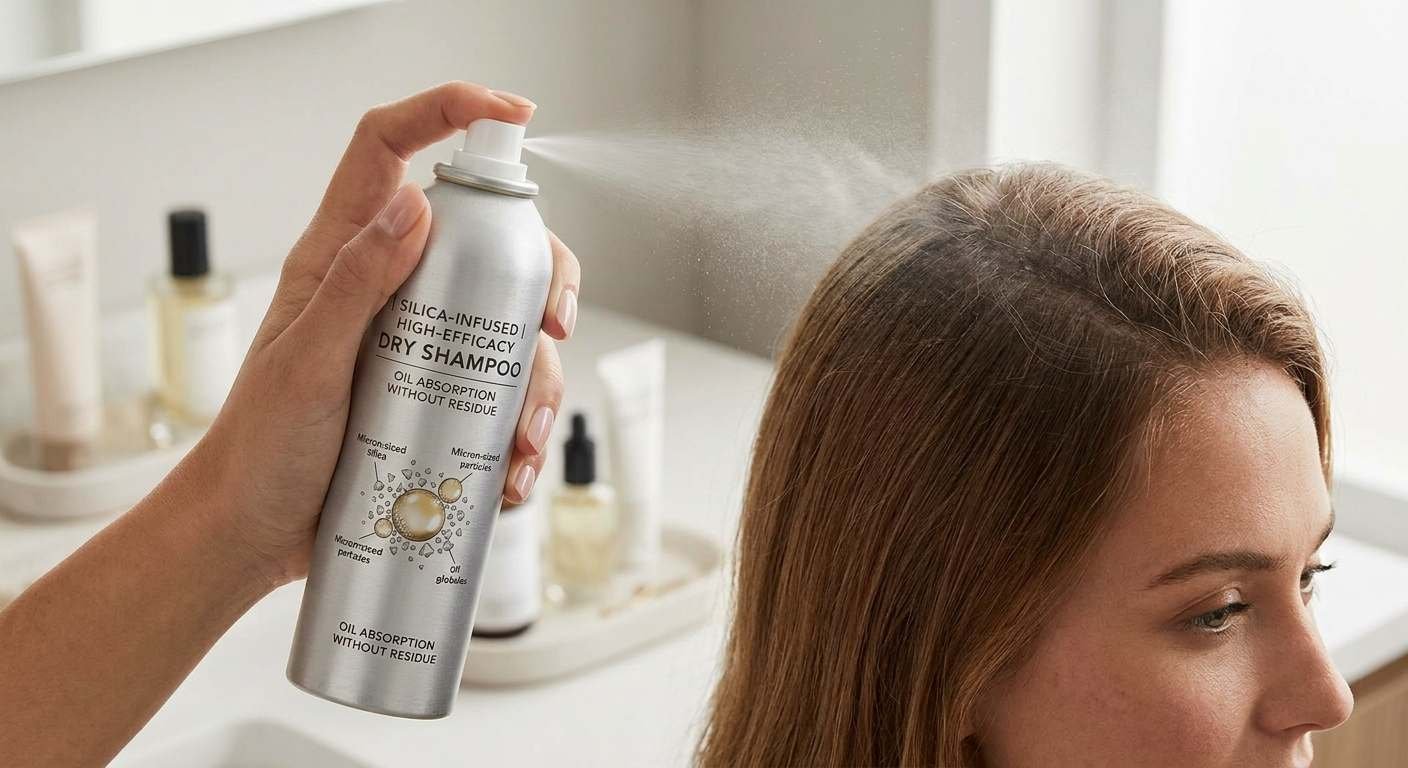
Choosing a winning product for your brand means looking past the marketing claims on the front of the can. To truly understand what makes a dry shampoo succeed with customers, you need to dive into the science of the formulation. Let's explore the key factors that separate a best-seller from a shelf-warmer.
How Do You Identify a High-Quality Dry Shampoo?
Sourcing a new product line always involves risk. Choosing a poorly formulated dry shampoo can quickly lead to negative customer reviews and damage your brand's hard-earned reputation for quality. The secret to avoiding this is knowing the key performance indicators that you can use to evaluate samples and supplier capabilities effectively.
A top-tier dry shampoo is defined by its ability to absorb oil almost instantly, leave no visible white cast, and maintain the hair's natural, soft texture. These outcomes are a direct result of deliberate formulation choices, not accidents.
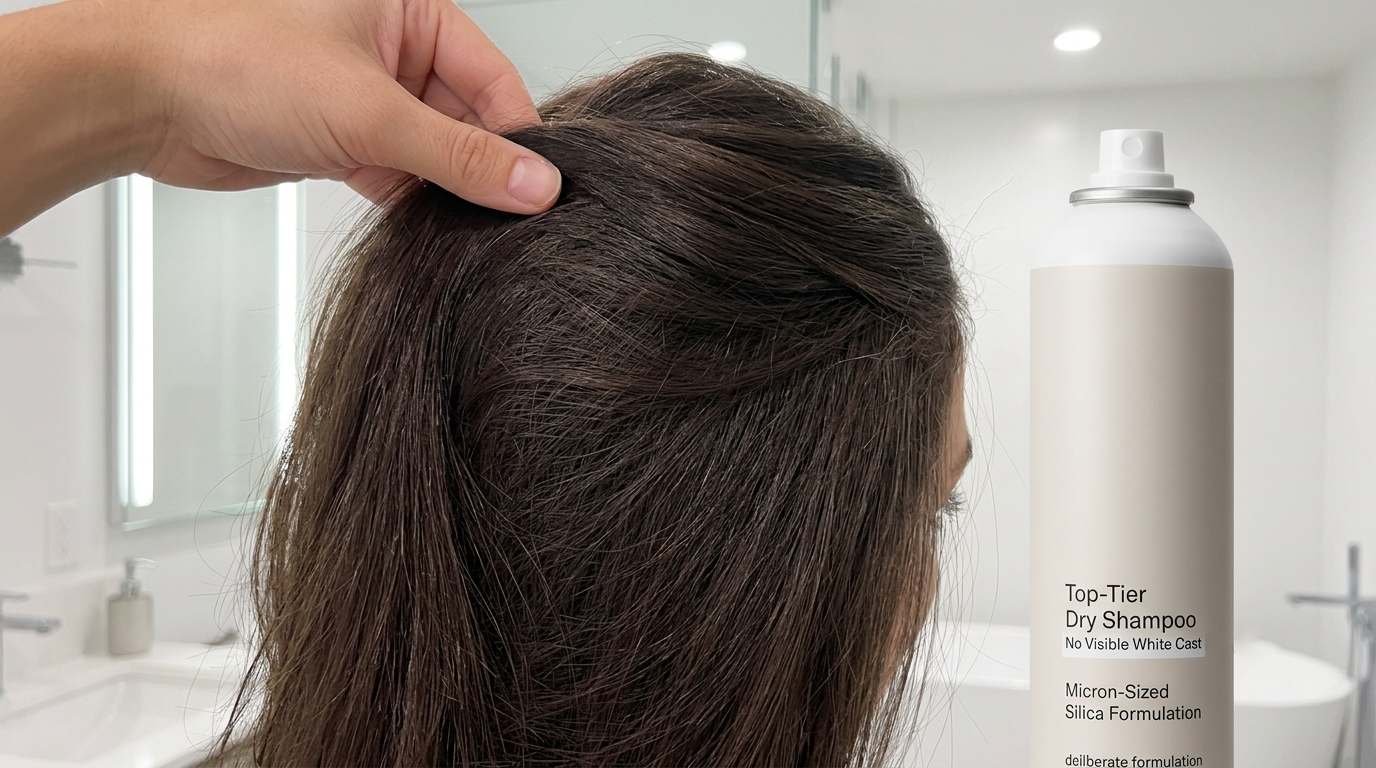
Dive Deeper: The Core Pillars of Efficacy
As a manufacturer with over 30 years of experience, I've seen countless product trends come and go. However, the fundamentals of a great dry shampoo have remained consistent. When we evaluate a formula in our lab, we focus on three non-negotiable pillars of performance.
H3: The White Residue and Suspension Problem
The most common complaint about dry shampoo is the dreaded white residue. This isn't just about the color of the powder; it's a direct result of poor suspension within the aerosol can.
- The Problem: The oil-absorbing powders in a dry shampoo are solids suspended in a liquid propellant system. If the particles are too large or dense, they quickly settle to the bottom of the can after being shaken.
- The Test: In our R&D, we've found that powders in low-quality formulas can settle completely in as little as 5 seconds. A consumer might shake the can, but by the time they lift it to their head, the powder has already settled. When they spray, they get a blast of propellant followed by a concentrated clump of powder, which is impossible to brush out and creates that obvious white cast.
- The Solution: A superior formula uses lighter, micron-sized particles that stay suspended for 30 seconds or more. This gives the user ample time to apply the product evenly, ensuring a fine, invisible mist of powder coats the hair roots.
H3: The Science of Precise Oil Absorption
Not all powders are created equal. The goal isn't just to dump any powder on the hair; it's to use a material specifically engineered to absorb the oils produced by the human scalp.
Sebum, the natural oil on our hair, typically has a molecular weight between 200 and 600 g/mol2. A high-performance dry shampoo must contain an absorbent powder that is optimized to attract and trap molecules in this specific range. We use porous particles that act like tiny sponges, pulling the oil away from the hair shaft and locking it away. This targeted absorption means the product works efficiently without needing to be over-applied.
H3: Gimmicks vs. Core Functionality
You've likely seen dry shampoo products that promise to "condition," "add shine," or "repair" hair. In my experience, these are almost always marketing gimmicks designed to justify a higher price point. A dry shampoo's primary—and only essential—function is to absorb oil and refresh hair.
Adding heavy conditioning agents or oils to a product designed to remove oil is counterintuitive3. These additives can weigh hair down and even reduce the formula's oil-absorbing efficacy. When sourcing a product, brand owners should be wary of these claims. Focus on the core function: does it make oily hair look and feel clean? A product that does its one job perfectly will always win more loyal customers than one that does three things poorly.
Rice Starch vs. Silica: Which Dry Shampoo Formulation is Superior?
When you look at an ingredient list, it can feel like trying to read a foreign language. However, for dry shampoo, the most important decision comes down to the primary absorbent ingredient. Choosing the wrong base formulation can doom your product to mediocrity from the start. The two dominant systems in the industry are rice starch and silica.
Generally, dry shampoo formulations based on silica are far superior to those using rice starch. This is due to silica's significantly better powder suspension4, the ability to formulate with less denatured alcohol, and a more refined, natural-feeling result on the hair.
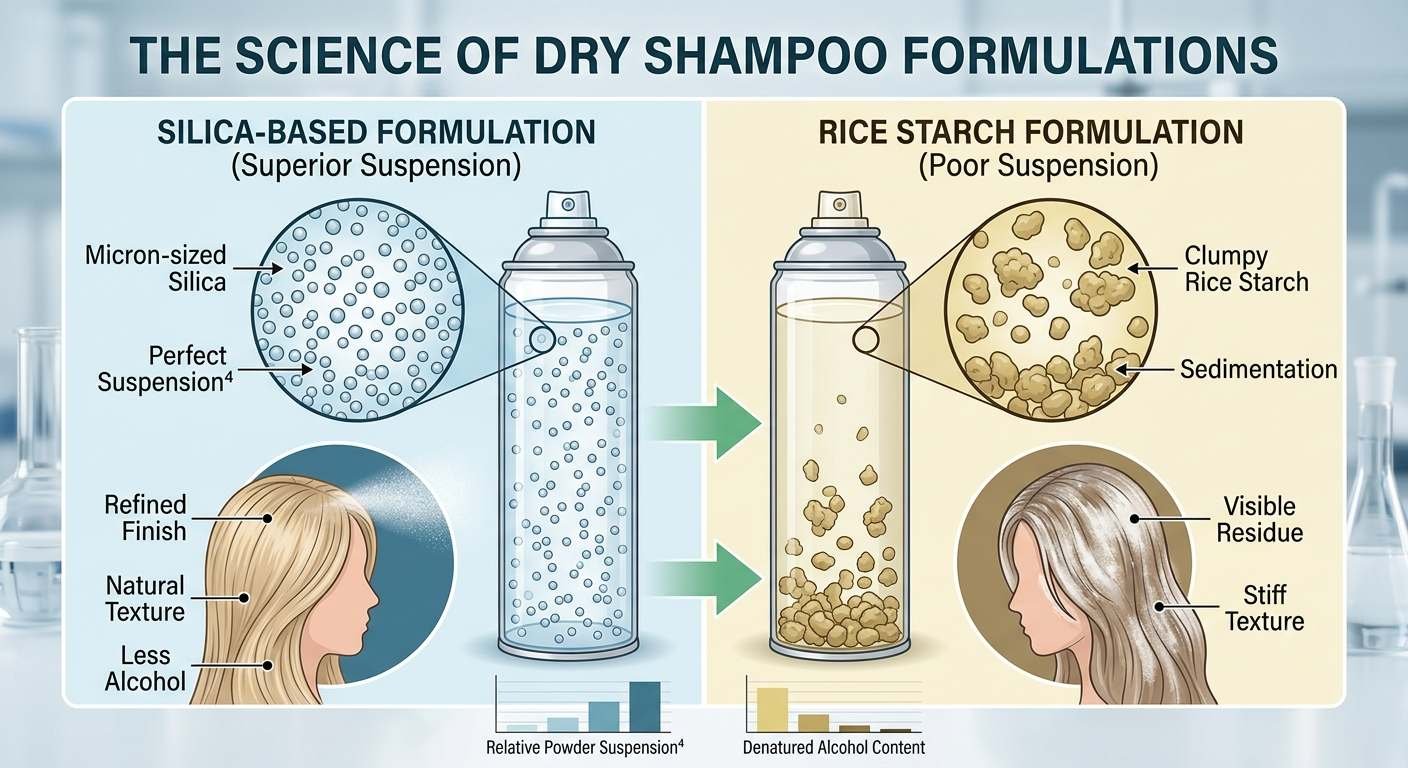
Dive Deeper: A Head-to-Head Technical Comparison
The choice between rice starch and silica is one of the most critical decisions in developing a modern, high-performance dry shampoo. While rice starch is a traditional and cheaper ingredient, it comes with significant drawbacks that impact the end-user experience. Our internal testing consistently shows that silica-based systems deliver a product that consumers prefer.
Here's a breakdown of how the two systems compare:
| Feature | Rice Starch System | Silica System | Winner |
|---|---|---|---|
| Suspension Time | ~5 seconds | 30+ seconds | Silica |
| Particle Size & Shape | Large, irregular, jagged | Small (~5μm), spherical, porous | Silica |
| Denatured Alcohol5 % | High | Very Low | Silica |
| Application Feel | Wet, slow to dry | Instantly dry and refreshing | Silica |
| Final Hair Texture | Stiff, gritty, heavy | Soft, natural, lightweight | Silica |
| White Residue Risk | High | Very Low | Silica |
H3: The Critical Impact of Alcohol Content
One of the most fatal flaws of rice starch systems is their reliance on a high concentration of denatured alcohol. Because rice starch particles are heavy, a large amount of alcohol is needed to help suspend them, even for a few seconds. This creates a major problem for the user: the spray comes out feeling wet and cold6. Consumers report that their hair feels damp and takes a long time to dry, defeating the purpose of a "dry" shampoo.
Silica systems, on the other hand, can be formulated with very little denatured alcohol. The spray feels instantly dry and refreshing. The moment it hits the hair, it begins absorbing oil, providing that immediate, "just-washed" look and feel that customers expect. This "instant effect" is a powerful driver of customer satisfaction.
H3: Why Particle Shape and Size Matter
The physical characteristics of the absorbent powder directly influence the final hair texture.
- Rice Starch: The particles are relatively large and have an irregular, jagged shape7. This causes them to "catch" on the hair cuticle, creating friction. The result is hair that feels rough, gritty, and stiff. While the oil may be gone, it's been replaced with an equally unpleasant texture.
- Silica: We select spherical silica particles that are engineered to be around 5 microns in diameter8. Their tiny size and round shape allow them to glide smoothly along the hair shaft. As they are brushed out, they take the absorbed oil with them without causing friction or leaving a heavy feeling behind. The hair is left feeling clean, soft, and natural.
For any brand owner looking to launch a dry shampoo, my advice is clear: invest in a silica-based formulation. The user experience is simply in another league.
How Should Customers Use Dry Shampoo for the Best Results?
Even the most technically advanced product can fail if customers don't know how to use it correctly. I've often seen negative product reviews that, upon investigation, stem from user error rather than a product flaw. Providing clear, concise, and effective instructions is a crucial part of your product's packaging and marketing strategy.
Proper dry shampoo application involves three key steps: shaking the can vigorously, spraying from the correct distance onto the roots, letting it sit for a minute or two to absorb oil, and then massaging and brushing thoroughly to distribute and remove excess powder.
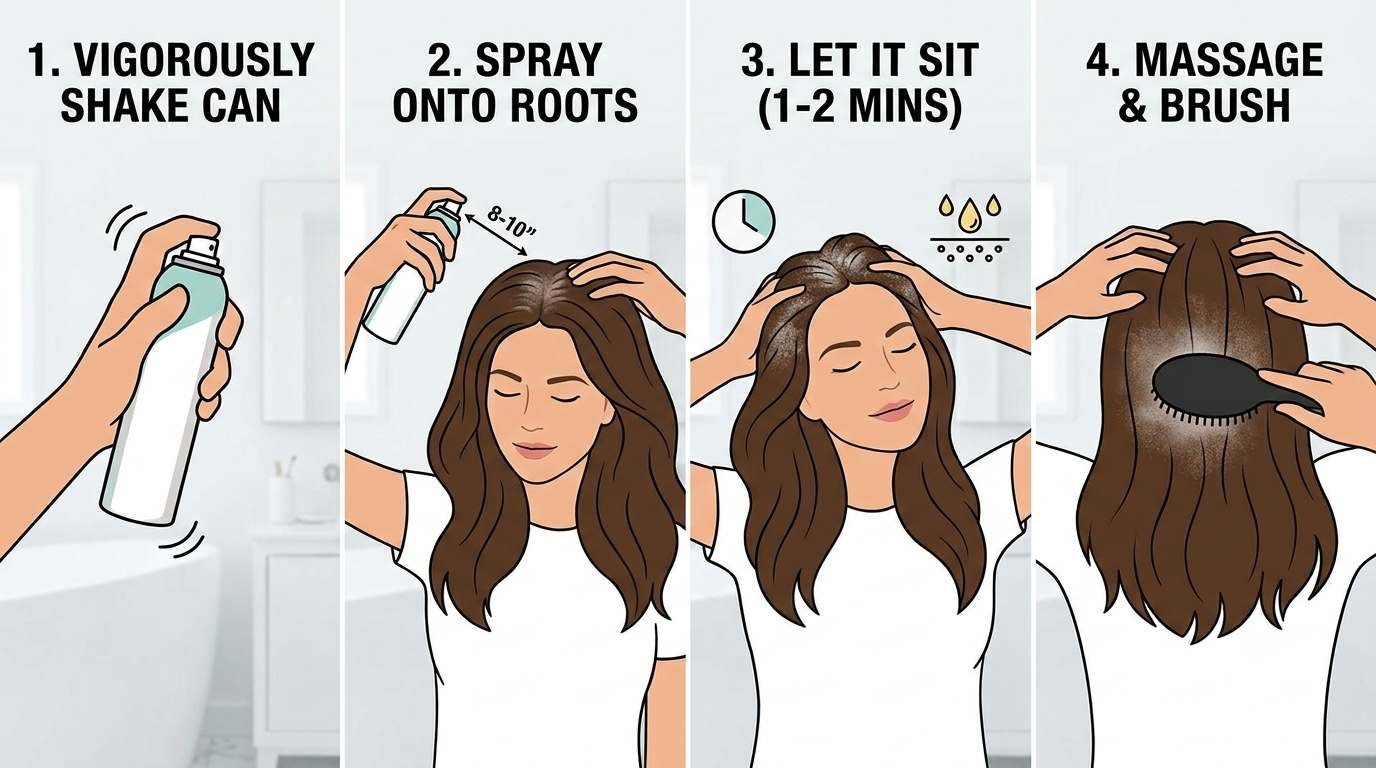
Dive Deeper: Educating Your Customer for Success
As a brand, your role is not just to sell a product but also to teach customers how to get the most value from it. Clear instructions prevent frustration and lead to better reviews. Here is the usage guidance we provide to our OEM/ODM partners to ensure their customers have a great experience.
Step 1: Shake Well
- Instruction: Shake the can vigorously for 6–10 seconds before use.
- Why It Matters: This is the most critical step. As we discussed, the oil-absorbing particles need to be evenly suspended in the can. Shaking for a sufficient amount of time ensures a fine, even mist is dispersed, preventing concentrated white patches.
Step 2: Apply Correctly
- Instruction: Hold the can 20–30 cm (8–12 inches) away from dry hair. Lift sections of hair and spray onto the roots in short bursts.
- Why It Matters: Distance is key for even coverage. Spraying too close concentrates the product in one spot. Targeting the roots is essential because that is where oil and sebum accumulate.
Step 3: Massage & Style
- Instruction: Let the product sit for 1–2 minutes. This allows the powder to fully absorb excess oil. Then, use your fingertips to massage the scalp. Finally, brush your hair thoroughly to remove any excess residue and style as desired.
- Why It Matters: The waiting period is when the magic happens. Massaging helps to break up the powder and distribute it further, while brushing removes any excess along with the absorbed oil, leaving hair looking and feeling clean.
H3: Essential Safety and Warning Information
For a pressurized aerosol product, clear safety warnings are a legal and ethical requirement. This information protects the consumer and your brand. We ensure all our products include comprehensive guidance.
CAUTION: FOR EXTERNAL USE ONLY. Avoid contact with eyes, mouth, and nose. If the product gets into eyes, rinse thoroughly with clean water immediately. Discontinue use if irritation or any abnormal skin reaction occurs. Keep out of reach of children.
WARNING (Pressurized Container): Extremely flammable aerosol. Pressurized container.9 Do not spray near an open flame or any incandescent material. Keep away from sources of heat, sparks, or hot surfaces. No smoking. Do not puncture or incinerate the can, even after use. Do not store at temperatures above 50°C (122°F). Store in a cool, dry place.
Frequently Asked Questions
Why does my dry shampoo leave a white residue?
This is usually caused by one of three things: a poor formulation with heavy powders that don't suspend well (like rice starch), spraying the product too close to your scalp, or not brushing it out thoroughly after letting it sit.
Can dry shampoo replace regular shampooing?
No. Dry shampoo is designed to absorb oil and refresh hair between washes, not to clean the scalp. It's a temporary solution. Regular washing with water and shampoo is still necessary to remove dirt, product buildup, and dead skin cells from your scalp10.
Is dry shampoo bad for your hair?
When used correctly and in moderation, a well-formulated dry shampoo is perfectly safe. However, over-reliance on it without regular washing can lead to scalp buildup, which may clog follicles11. It's all about finding a healthy balance.
What should I look for on a dry shampoo ingredient list?
For the best performance, look for Silica as one of the primary absorbing agents. This indicates a more modern formulation. Also, check the position of Denatured Alcohol; if it's one of the very first ingredients, the product may feel wet upon application.
Conclusion
Choosing the best dry shampoo for your brand comes down to prioritizing technical performance over marketing fluff. A superior product is built on a modern, silica-based formulation that absorbs oil efficiently without leaving a white cast or stiff texture. It relies on well-suspended, micron-sized particles and a low-alcohol content to deliver an instant refreshing effect that customers will notice and appreciate. By focusing on these core attributes—oil absorption, invisibility, and hair feel—you can select a product that builds brand loyalty and earns glowing reviews.
As a specialized manufacturer with over 30 years of experience in cosmetics, we at OKANEN are experts in creating high-performance personal care solutions. We understand the science behind a truly effective dry shampoo. If you're a brand owner, wholesaler, or retailer looking to develop a superior product for your customers, we invite you to connect with us. Let's discuss our proven stock formulations or collaborate on a custom solution tailored to your brand's unique vision.
"The Global Prevalence of Seborrheic Dermatitis", https://pubmed.ncbi.nlm.nih.gov/38958996/. Dermatological studies and consumer surveys indicate that excessive scalp sebum, leading to oily hair, is one of the most common hair concerns reported by individuals across various ethnicities and age groups. Evidence role: statistic; source type: research. Supports: that oily hair is a widespread cosmetic issue.. Scope note: While the issue is widespread, prevalence rates can vary significantly based on genetics, age, and environmental factors, so "universal" should be understood as "very common" rather than affecting every person. ↩
"Sebaceous gland lipids - PMC", https://pmc.ncbi.nlm.nih.gov/articles/PMC2835893/. Biochemical analysis of human sebum shows it is primarily composed of triglycerides, wax esters, squalene, and free fatty acids. The molecular weights of these individual lipid molecules largely fall within the 200 to 600 g/mol range. Evidence role: definition; source type: paper. Supports: the typical molecular weight range of the primary components of human sebum.. ↩
"Effect of emollients on UV filter absorbance and sunscreen ...", https://pubmed.ncbi.nlm.nih.gov/32065958/. Cosmetic formulation science dictates that the efficacy of an absorbent-based product, like dry shampoo, relies on the high surface area of its powders to adsorb lipids. Introducing heavy oils or conditioning agents can pre-saturate these powders or coat the hair shaft, directly competing with and hindering the primary goal of oil absorption. Evidence role: mechanism; source type: education. Supports: that combining absorbent powders with heavy conditioning agents can reduce a dry shampoo's effectiveness.. ↩
"Silica Powder — Ingredient Encyclopedia", https://diycosmetica.com/ingredient/silica-powder. Material data shows that cosmetic-grade amorphous silicas can be engineered to have a very low bulk density and a spherical or branched-chain morphology. Compared to the denser, larger, and more irregular granules of rice starch, these properties reduce the sedimentation rate in liquid propellants, leading to more stable suspensions. Evidence role: general_support; source type: research. Supports: that the physical properties of engineered silica are more favorable for suspension than those of native rice starch.. ↩
"Cosmetics Labeling Guide", https://www.fda.gov/cosmetics/cosmetics-labeling-regulations/cosmetics-labeling-guide. Cosmetic labeling regulations, such as those enforced by the U.S. Food and Drug Administration (FDA), mandate that ingredients be listed in descending order of predominance by weight. Therefore, an ingredient appearing first or second on the list is present in the highest concentration. Evidence role: definition; source type: government. Supports: that ingredients on a cosmetic label are listed in descending order of concentration.. Scope note: Ingredients present at a concentration of 1% or less may be listed in any order after the ingredients present at more than 1%. ↩
"Ethanol (data page)", https://en.wikipedia.org/wiki/Ethanol_(data_page). The cold sensation is a result of evaporative cooling. Alcohol has a high vapor pressure and low latent heat of vaporization, causing it to evaporate rapidly upon contact with a surface. This phase change requires energy, which it draws from the hair and scalp in the form of heat, producing a distinct cooling effect. Evidence role: mechanism; source type: encyclopedia. Supports: the physical principle behind the cold sensation from alcohol-based sprays.. ↩
"Rice Starch Chemistry, Functional Properties, and Industrial ...", https://pmc.ncbi.nlm.nih.gov/articles/PMC11722826/. Scanning electron microscopy (SEM) analyses of native rice starch reveal compound granules that are polygonal, angular, and irregular in shape, with individual granule sizes typically ranging from 2 to 8 micrometers. Evidence role: general_support; source type: paper. Supports: the typical shape and size of native rice starch granules.. Scope note: The term "jagged" is a qualitative interpretation of the observed polygonal and angular structure of the starch granules. ↩
"Relating particles and texture perception", https://pubmed.ncbi.nlm.nih.gov/16112152/. Manufacturers of specialty ingredients produce various grades of synthetic amorphous silica with tightly controlled particle size distributions. For cosmetic applications, sizes in the 3-12 micron range are common to balance oil absorption capacity with a smooth, non-gritty sensory feel on skin and hair. Evidence role: general_support; source type: research. Supports: that cosmetic-grade silicas are often manufactured within a specific micron-size range to optimize performance.. Scope note: While 5 microns is a typical and effective size, the optimal diameter can vary depending on the desired balance of properties like oil absorption, optical blurring, and texture. ↩
"Label requirements between CPSC and HCS 2012 ...", http://www.osha.gov/laws-regs/standardinterpretations/2015-06-29-2. Regulatory agencies, such as the U.S. Consumer Product Safety Commission (CPSC) and the European Union under its Aerosol Dispensers Directive, require specific pictograms and warning statements on flammable aerosol products. These labels must inform consumers of dangers related to flammability and pressurization to ensure safe handling and storage. Evidence role: general_support; source type: government. Supports: that specific warning labels are legally mandated for flammable aerosol products.. Scope note: The exact wording and symbols required can differ slightly between regulatory jurisdictions (e.g., USA vs. EU). ↩
"Healthy Habits: Hair and Scalp Hygiene", https://www.cdc.gov/hygiene/about/hair-and-scalp-hygiene.html. Organizations like the American Academy of Dermatology explain that dry shampoos work by absorbing oil, not by cleaning. Surfactant-based shampoos and water are necessary to effectively remove environmental pollutants, product residue, sweat, and dead skin cells from the scalp to maintain its health. Evidence role: expert_consensus; source type: institution. Supports: that dry shampoo absorbs oil but does not cleanse the scalp.. ↩
"Scalp Folliculitis from Dry Shampoo?", https://www.reddit.com/r/Folliculitis/comments/h7mlpj/scalp_folliculitis_from_dry_shampoo/. Dermatologists advise that while safe in moderation, the overuse of dry shampoo can lead to an accumulation of product, oil, and skin cells on the scalp. This buildup can potentially obstruct hair follicles, leading to inflammation (folliculitis), itching, and disruption of the normal hair growth cycle. Evidence role: general_support; source type: education. Supports: the potential for scalp issues from excessive dry shampoo use.. ↩
